Posts

Showing posts with the label Economics

China's new silk road
Image
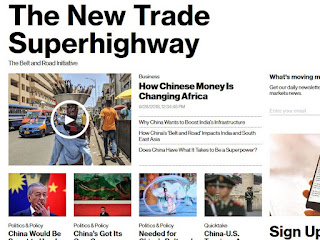
China is in the midst of the largest, and most ambitious, infrastructure project in modern history. President Xi Jinping's trillion-dollar Belt and Road Initiative spans three continents and will touch nearly 60 percent of the world's population. If succeeded, this will be the most important development of this century, transforming how we travel, the exchange of cultures, trade and geopolitics forever.  Bloomberg has made a really nice documentary about this initiative. Take a look and learn more here:

The Netherlands as the world's second biggest food exporter

Image
I recently stumbled upon an intriguing economic story that I found rather unexpected. Apparently, the Netherlands, despite being a relatively small country, has managed to become the second largest food exporter in the world. I must say, it's a remarkable feat and a testament to their hard work and dedication. This piece of news got me thinking that perhaps the UK, with its similar climate, could take a page from our neighbor's book and potentially thrive in this industry as well. It's definitely worth considering and exploring further. Are you curious about all the hype about AI? Want to write reports and emails more effectively?  Try Jasper writing assistant today for free .

Brazil's Sustainable Biofuel Economy: A Remarkable Achievement

Image
Brazil stands out as the world's first sustainable biofuels economy and the leader in the biofuel industry. This remarkable achievement is partly thanks to favorable circumstances, yet it is still an impressive feat. It's surprising that this isn't common knowledge. Did you know that over 50% of all cars fuels used in Brazil are produced from sugarcane-derived bio-ethanol? Although this biofuel economy may not be globally scalable, it serves as an excellent example of how new industries and technologies can emerge out of necessity when markets are shielded from direct overseas competition. In this case, imported fuel is too expensive for the Brazilian market. For those interested in learning more about the technology behind Brazil's biofuel industry, the BBC documentary "The World in 2050" is an excellent resource. It offers insight into the innovative technologies that have made Brazil a leader in the field. Recommended Book Are you curious about all the hype...

A better way to transfer money abroad? Here is TransferWise

Image
A friend recently told me about this new platform that offers exchange rates as you see them online, which are much better than what you can get at the banks. I have mentioned peer-to-peer lending in a previous post . Here is yet another example where technology is enabling smaller firms to challenge the dominance of traditional banks, and sometimes allowing service users to bypass the banks altogether. The idea seems obvious. Use technology to match up people who need to exchange money. If this is managed well, the overall movement of money in both directions should cancel each other out and the money never have to leave the respective countries. Instead of having a middle-man (i.e. a bank) the money is exchanged directly between individuals.  Simple yet innovative, and very convenient. I will try this next time I need to make an overseas payment. If you have used TransferWise before please share your experience with us. Recommended Book

What is Capital Control?

Image
For those of you that are wondering about the recent news headlines, here is a brief explanation. I do hope that the Greeks can find a solution to their problems soon.

So why are there still buyers for bonds with negative rates?

Image
Following my earlier rant on Negative Interest Rates by Central Banks, it is perhaps worth mentioning that many Government  and Corporate Bond rates are also negative these days. This means that effectively if you lend to these governments or companies, at the end of the term after a few years, you will have to pay them for the privilege of lending them the money (instead of  earning any interest). This sounds really silly, so why are those bonds selling so well? There are perhaps two sane explanations.. or are they? - People may buy government bonds with negative interest rates in the hope that the currency the bonds are denominated in will appreciate substantially in value, thus still make a good return for investors. - People may buy bonds with negative interest rates as long as they can find buyers later on that are willing to pay even more for it. When a good number of people are making investment decisions not based on the value of the underlying asse...

The effects of negative interest rates + QE not working

Image
Is negative interest rate really wise? Many Central Banks around the world are now penalizing commercial banks for holding too much deposit with negative interest rates, hoping to encourage more lending to companies and enterprises, which can then hopefully hire more people and thus economic growth for the country. However, apart from a few cases where counties with relatively more stable currencies (e.g. Switzerland) are trying to fend off too much currency appreciation, there is something very unnatural about penalizing saving and encourage debt creation. Does negative interest rate really work as a stimulus? Here are some food for thoughts based on my limited knowledge: Impact on Capital Capital is not simply cash at the banks, but money that are used to fund economic activities (the machine) to create products and services (added value). In an era of negative interest rate, lenders would rather use up their capital rather than saving it, which attract negat...

Why Cheap Oil Doesn't Stop the Drilling

Image
To fellow investors: Just to share with you a video which I think summarizes the recent oil events quite well. As for what this means in terms of future oil prices, I will let you do the maths.

Beer and Big Data

Image
Data Analytic doesn't have to be complicated, or be too big to manage; what you need is to have the relevant data for the decisions you want to make. This pub business is a perfect example of how quickly data supported decisions can be implemented and immediately start to make a real difference. When the underlying data of the business is presented in digestible formats fit for human consumption, the solutions become obvious. The trick is to use technology (but not over complicate things) to help us see those patterns that we could not track before. 

What can be done about Food Waste?

Image
This BBC business report shows some staggering statistics of how much food is being wasted globally. And apart from household waste, a lot of food actually never made it to our fridge. It is encouraging to see individual farmers partnering with local charities or businesses to make use of perfectly edible produce which were excluded by supermarkets due to less than perfect appearances. Charities and environmental agencies should actively pursue this type of win-win ideas. It is a brilliant policy (although it could take sometime for restaurants to get used to) to require New York City's restaurants stop sending food waste to landfills in 2015 and encourage the use of alternative operations. However, I do hope that restaurant businesses are not financially worse off because of these new requirements. If anything, corresponding environmental policies should ensure it is not more expensive or difficult in any way to send waste to these alternative operations. The project ...

Product Lifespan and Consumerism

Image
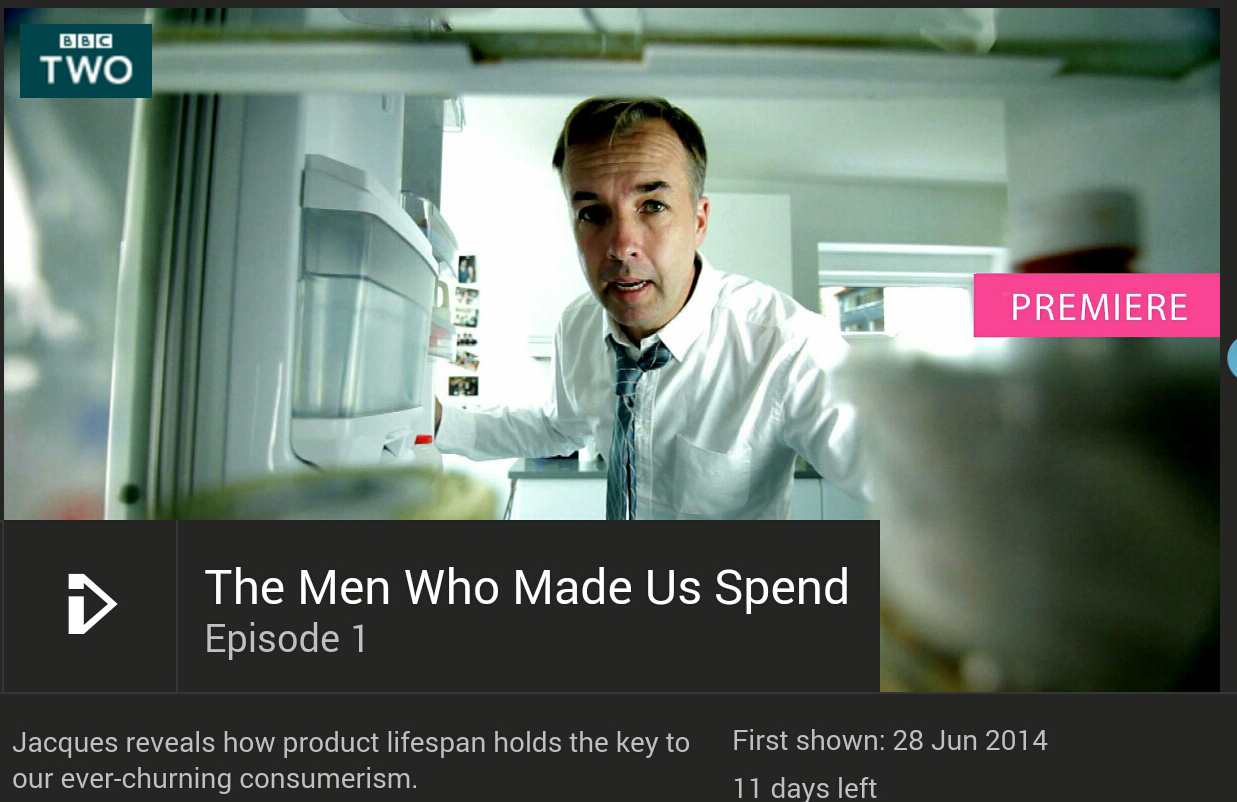
I like the fact that every now and then there will be a preachy documentary or TV program that reminds us how wasteful we are - because we tend to forget. This BBC2 program 'Men that made us spend' asks some very valid questions. The companies of this world have become very good at creating, producing and making a profit. However, there doesn't seem to be enough economic incentives to complete the product life cycle loop, one that includes converting obsolete products back to usable raw materials. To the extent that usable older products that are still in boxes that have never been opened are being thrown away. Why? I don't blame people for wanting to buy things, but if the world is going to operate under this model then surely we also need satisfactory solutions to deal with its weaknesses for it to be sustainable. Is there a missing component in our modern economies? Is it due to lack of the technologies required? I have heard that it's more expensive to r...

Simple Charcoal that Save Lives

Image
I love the passion and the enthusiasm that the speaker has for her projects. Those are wonderfully simple ideas but ones that can really make a difference. It goes to show that technology does not need to be highly advanced, complex, or expensive to have a wide impact. They should however, be practical and can be easily transferred to be used and accepted by the people that need them. I wonder what happened to these projects and if they managed to create local businesses out of them. It also makes me wonder if there are other teams or charities out there that are unaware of these products and are instead working on their own versions of the solution. Diversity in approach is good, but on the other hand reinventing the wheel can also use up valuable resources if suitable solutions are already out there. Wouldn't it be nice if there is a Comparison Website for sharing and searching for these type of products and ideas?

Merkel's Mobile and US Spying

Image
Read this article online today, the photo says it all. The United States really did quite some damage here. If there is anything that you don't want to be messing with in Europe, that would be the issue of "Privacy" with a capital P. It is interesting to note the cultural differences across the world when it comes to personal privacy. Talking to businesses and individuals from the US, Europe, Middle East and Asia, you very quickly realize that some feel more strongly than others about data privacy. From time to time you hear US tech companies get slapped on the face when they expand their services abroad due to privacy issues. GoogleMaps is a good example. In the new era of Big Data, the Internet of Things, Smart Cities and the increasing challenge of cyber security, how people feel about the technologies and their privacy can have interesting impacts on how the local commerce, legal, economics...etc develops in the future. It may seem extreme to people from oth...

Rethinking Loyalty Programs with a Big Data Brain

Image
"A wide new world of opportunity is possible if retailers put the proper analytics to work against the raw data they already possess." "Big data in loyalty programs is all about increasing precision. A retailer that has a good sense of what products will draw customers in and when may decide not to extend the 5 percent discount to particular customers. This can boost profits for the retailers without antagonizing the consumer." "By using big data, retailers can gain insight that helps them show the customer that they understand and know them as individuals and can even anticipate what they want." Well, I think it makes a lot of sense.  R ea d the full article here .  

Why Big Data? Why Now?

Image
I firmly believe that the Big Data revolution is upon us, if not already unfolding around us. The potential for this technological shift is incredibly exciting, as it promises to transform industries and redefine how we understand and utilize information. ********* Monday.com   is a powerful and versatile platform that can help your team work smarter and improve productivity. Sign up for a  free trial  or request a demo to find out more. #mondaydotcom #ERP  #productivity #automate #processes

Why Grocers Like Tesco Find Trouble in the U.S. Market

Image
An interesting read (click on image below). Perhaps grocery shopping is such a personal thing that it just takes a lot of effort to establish that relationship with the customers (i.e. people often go look for familiar brands or things that they grew up with).  Although it is still surprising that so many foreign grocers companies that have failed to compete in the US. Of course, with Big Data (if companies can get their hands on data for historic US consumer habits) there may be ways to mimic that experience, products, and branding that local customers are looking for.  With more supermarket groups now exploring China, it will be interesting to see if the Chinese consumers would be more accepting for western products, as concerns for food safety becomes a growing issue domestically. 

EPCC (Edinburgh Parallel Computing Centre)

Image
As computing power become cheaper and more widely available, it has significantly improved efficiency and our work processes. High Performance Computers (HPCs or Supercomputers) are being used to model the real world with increasing realism and has enabled us to study and understand our physical world better.  With the new paradigm extension towards data supported predictive capabilities, computers are now able to go through large volumes of available data and help people make better decisions (traditionally it would be too time consuming or just impossible for humans to gather, absorb and analyze the huge amount of data we generate everyday). Many countries, including the UK are now realizing the importance/impact of HPC to our industries and the economy. EPCC is actually one of the leading HPC centres in the world. I was quite surprised it is actually so close to home. ------------------- EPCC Founded at The University of Edinburgh in 1990, EPCC is a l...

If this then that (IFTTT) - create powerful connections between applications

Image
This next post I am about to write is still shocking my brain (as I think about it). The simplicity and powerfulness of this idea is probably going to sweep the rest of the world off the feet.  Global Internet usage has been growing quite dramatically around the world (click on the map below to see the video on the BBC website). Our everyday life has changed quite a lot in the past few decades. From emails to blogs, twitter and facebook, online news to dropbox, the Internet plays a very significant part of our day to day life and we spend a lot of time on these applications, whether using our laptop, desktops, tablets or mobile phones. You may have just checked your facebook a few minutes ago, created a tweet to tell the world an exciting news you wanted to share, sent out a work email to your boss or a greeting card to a friend, uploaded some files to dropbox as backup... That is a lot of activities, no wonder your company is complaining you spend too much time procrastinatin...

Why do companies go to Science Parks or Research Parks?

Image
Good question, let's do some web search.. Innovation for business A research park , science park , or science and technology park is an area with a collection of buildings dedicated to scientific research on a business footing. Typically businesses and organizations in the parks focus on product advancement and innovation as opposed to industrial parks that focus on manufacturing and business parks that focus on administration. For Companies :   1. Benefit from built facilities and infrastructures A Research Park offers considerable advantages to hosted companies, by reducing overhead costs for facilities such as office and lab areas, uninterruptible power supply, telecommunications hubs, reception and security, management offices, restaurants, banks, convention center, parking, internal transportation, entertainment and sports facilities...etc. 2. Benefit from unique R&D resources (both human expertise and facility access) Research Parks can a...

Research and Development (R&D)

Image
I have been looking into the world of R&D, and the role it plays in our economy. This post like many others can expand overtime as it is a rather big topic, but I shall begin by finding some of the basic definitions... ------------------------------------------------------------------------------------------------------------- What is R&D? R&D refers to specific activities within a business. R&D activities differ from company to company, but there are perhaps two primary focuses:  1. To develop new products;  2. To discover and create new knowledge about scientific and technological topics for the purpose of uncovering and enabling development of valuable new products, processes, and services. Why R&D? R&D can involve some uncertainty as to the return on investment (ROI); researchers do not know in advance exactly how to accomplish the desired result. Higher R&D spending does not guarantee "more creativity, higher profit or ...